
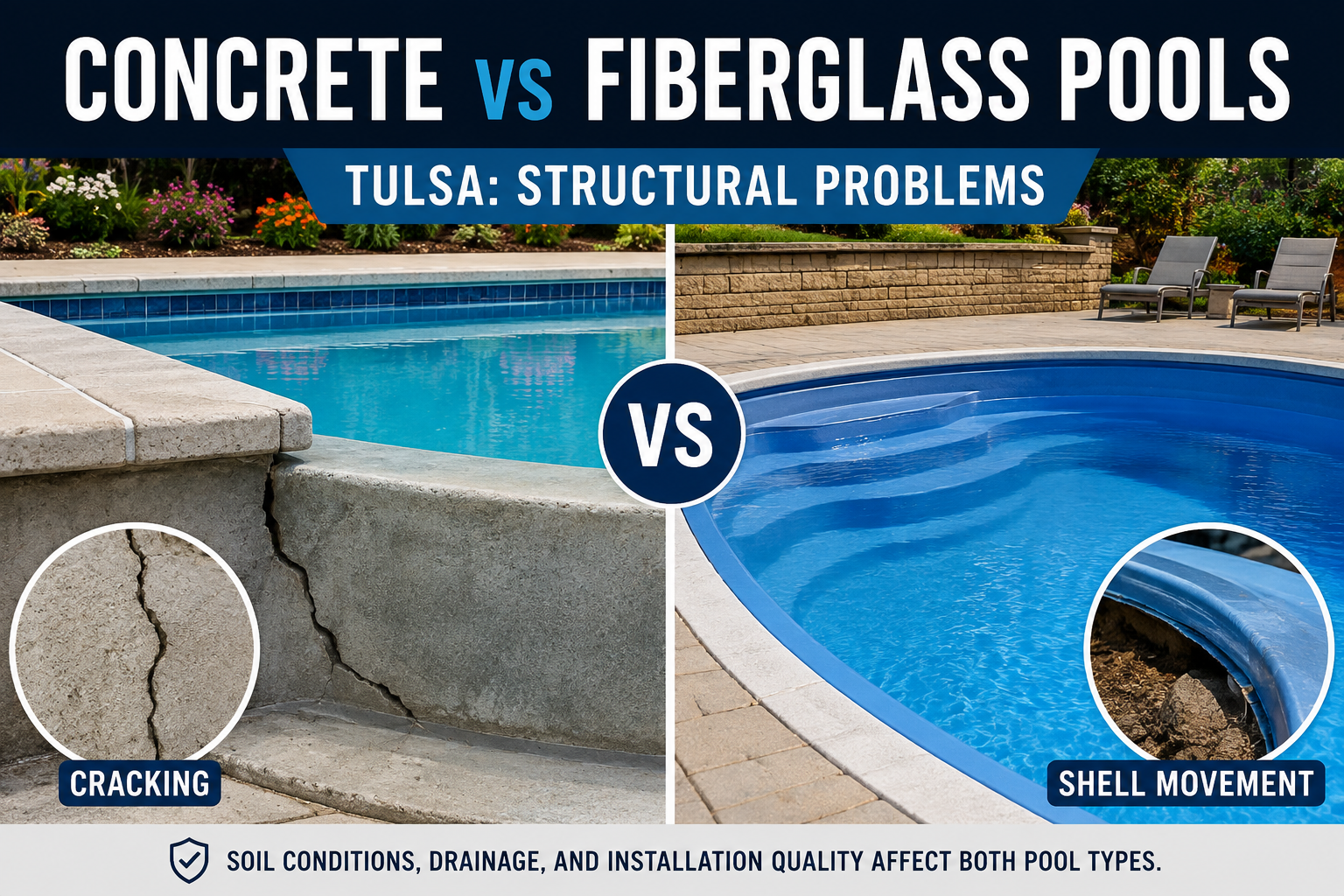
Choosing between a concrete and fiberglass pool is a major decision for any homeowner. Both types can provide years of use, but they are built differently and can develop different problems over time. In Tulsa, ground conditions, drainage, weather, installation quality, and age can all affect how a pool performs.
Concrete Pool Structure
Concrete pools are built on-site and can be designed in many shapes and sizes. Their solid construction offers plenty of design flexibility, but concrete can develop cracks as the pool ages. A small surface crack may not indicate a serious structural problem, while a growing or significant crack deserves closer attention.
Fiberglass Pool Structure
Fiberglass pools are manufactured as a single shell and installed in an excavated area. The material has some flexibility, but that does not make a fiberglass pool immune to structural problems. Ground movement, installation conditions, drainage, and pressure around the shell can affect its condition over time.
Concrete Pool Cracking
Cracks are one of the main structural concerns homeowners may notice with concrete pools. Not every crack means the pool structure is failing. Surface cracks can sometimes be limited to the finish, while cracks that grow, extend through the structure, or appear with other warning signs may require further investigation.
Fiberglass Pool Movement
Fiberglass pools can experience movement when surrounding ground conditions or installation problems affect the shell. Homeowners may notice changes such as unusual bulging, shifting, gaps around the pool, or changes in the shell’s appearance. These signs do not automatically mean the pool has major structural damage, but they should not be ignored.
Tulsa Soil Can Affect Pools
The soil surrounding a pool plays an important role in its long-term condition. Ground can settle, shift, expand, or become saturated after heavy rainfall. These changes can place stress on a pool and its surrounding areas regardless of whether the pool is concrete or fiberglass.
Drainage Matters in Tulsa
Heavy rain and poor drainage can create additional problems around a swimming pool. Water that remains around the pool can affect surrounding soil and contribute to movement or settling. Proper drainage helps direct excess water away from areas where it could create unnecessary pressure around the pool.
Which Pool Faces More Problems?
There is no reliable rule that says concrete pools or fiberglass pools always experience more structural problems. Concrete can develop cracking, while fiberglass can experience shell movement or installation-related issues. The quality of installation, surrounding conditions, maintenance, age, and the specific condition of the pool can be more important than the material alone.
Age and Maintenance Matter
A well-installed pool can perform well for many years, but aging can eventually reveal problems that were not noticeable earlier. Regular attention also matters. Keeping an eye on cracks, water levels, drainage, surfaces, and other changes can help homeowners recognize potential problems before they become more difficult to address.
Signs of a Structural Problem
Some warning signs deserve more attention than others. Growing cracks, unexplained water loss, noticeable movement, unusual gaps, bulging, or changes around the pool may indicate that something needs to be investigated. A visual change does not automatically confirm structural damage, but it provides a good reason to look more closely.
When to Get Pool Repair Help
If you notice a significant crack, unusual movement, persistent water loss, or another change that concerns you, don’t simply assume the pool material is responsible. Finding the actual cause is important before deciding on a repair. The right solution depends on what is happening and how serious the problem is.
Final Thoughts
Concrete and fiberglass pools can both develop structural problems as they age. Concrete vs Fiberglass Pools is therefore not simply a question of which material is stronger. For Tulsa homeowners, soil conditions, drainage, installation quality, age, and maintenance can all influence how a pool performs over time.
Quick Takeaway
Concrete pools may develop cracks, while fiberglass pools may experience movement or shell-related issues. Neither type is completely free from structural concerns. If you notice significant changes, unusual water loss, or signs of movement, identifying the cause is more useful than assuming the material itself is the problem.
Need Pool Repair in Tulsa?
If you’re concerned about cracks, movement, water loss, or other unusual changes in your swimming pool, a professional evaluation can help determine what may be happening. For homeowners in the Tulsa area, 600Monkeys provides pool repair services based on the condition and needs of each pool.
Frequently Asked Questions
Are Concrete Pools More Likely to Crack?
Concrete pools can develop cracks over time, but not every crack is a structural problem. A small surface crack may be less concerning than a crack that grows, extends into the structure, or appears alongside water loss or noticeable movement. The location and progression of the crack are important when determining what should happen next.
Can Fiberglass Pools Have Structural Problems?
Yes. Fiberglass pools can experience structural or shell-related problems caused by factors such as ground movement, poor installation conditions, drainage issues, or pressure around the shell. Signs such as unusual bulging, shifting, or changes in the shell should be investigated rather than automatically dismissed.
Does Tulsa Soil Affect Both Concrete and Fiberglass Pools?
Yes. Changes in surrounding soil can affect both pool types. Settling, movement, expansion, and excess moisture can place stress on the pool and nearby areas. This is why proper installation, drainage, and attention to changes around the pool are important regardless of the material.
Which Pool Type Lasts Longer?
Both concrete and fiberglass pools can have long service lives when they are properly installed and maintained. Concrete can require more ongoing surface maintenance, while fiberglass has different maintenance and repair considerations. The quality of construction, installation, care, and surrounding conditions can have a major effect on how long either type performs well.
Should I Worry About a Crack in My Pool?
You shouldn’t automatically assume that every crack is serious, but you also shouldn’t ignore a crack that is growing or accompanied by other warning signs. If you notice increasing water loss, movement, separation, or changes around the crack, the condition should be evaluated to determine whether it is cosmetic or related to a more significant problem.
Can Pool Structural Problems Cause Water Loss?
They can. A structural problem may allow water to escape, although water loss can also come from plumbing, fittings, equipment, or other parts of the pool system. If your pool is consistently losing more water than normal evaporation can explain, finding the source of the loss is the first step toward choosing the right repair.