
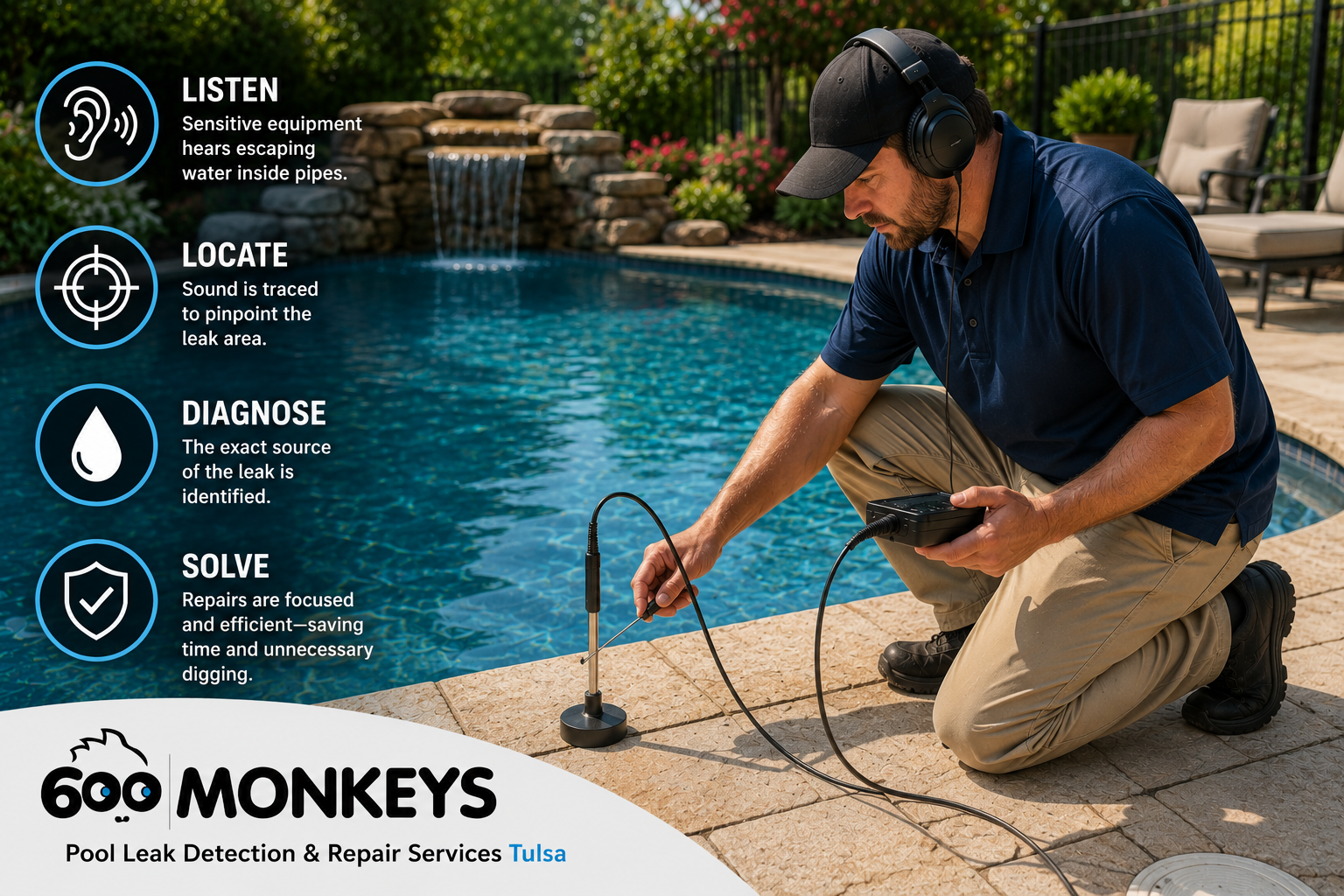
How Electronic Pool Leak Detection Finds Hidden Leaks
A pool can lose water even when there is no visible crack, puddle, or broken fitting. When the leak is hidden in underground plumbing, simply looking around the pool is not enough. Electronic Pool Leak Detection helps professionals listen for escaping water and narrow down the location of a concealed plumbing leak without blindly opening large areas around the pool.
What Is Electronic Pool Leak Detection?
Electronic pool leak detection uses sensitive listening equipment to detect the sound and vibration created when water escapes from a pressurized pipe. The equipment amplifies sounds that would normally be too faint to hear, allowing the suspected leak area to be narrowed down more accurately.
What Pool Leaks Can Electronic Detection Find?
Electronic listening is used primarily to locate hidden leaks in pressurized pool plumbing, including lines buried beneath soil, decking, or concrete. It is especially valuable when water loss points to a plumbing problem, but there is no visible sign showing exactly where the pipe is leaking.
How Does the Process Work?
The suspected plumbing line is tested so that escaping water creates a detectable sound or vibration. A professional listens at different points along the suspected area and compares those sounds. The strongest or most characteristic leak sound helps narrow the search to the area where water is escaping.
Can It Find Leaks Under Concrete?
Yes. Finding concealed plumbing leaks beneath concrete is one of the useful applications of electronic leak detection. The listening process helps narrow down the leak location from above, so the repair area can be identified before concrete is opened for access.
Does Electronic Testing Require Digging First?
No. The purpose of electronic testing is to locate the suspected underground leak before digging or concrete removal begins. Once the leak location has been narrowed down and confirmed, access may then be required to expose and repair the damaged plumbing.
Why Is Pressure Testing Also Important?
Pressure testing answers a different question. It helps determine whether a plumbing line is holding pressure or leaking, while electronic listening helps locate the leak along a suspected line. When appropriate, the two methods work together: pressure testing identifies the leaking plumbing circuit, while electronic detection helps narrow down where that leak is located.
What About Pool Shell and Fitting Leaks?
Electronic listening is not the correct test for every leak. Leaks around fittings, skimmers, lights, cracks, or other accessible pool areas can be investigated using methods such as visual inspection and dye testing. The testing method should match the type of leak being investigated rather than forcing one technology to do every job.
Why Accurate Leak Location Matters
A confirmed leak still has to be accessed and repaired, but knowing where it is changes the repair process. Instead of opening several areas in search of a damaged pipe, the work can be focused on the diagnosed location. That can mean less unnecessary digging, concrete removal, disruption, and repair work.
When Is Pool Leak Detection Needed?
A pool that repeatedly needs additional water, loses noticeably more water than normal evaporation can explain, or develops unexplained wet areas deserves investigation. The first goal is to confirm that abnormal water loss exists. The next is to determine whether the source is plumbing, equipment, the pool structure, or another component.
Final Thoughts
Electronic pool leak detection is not simply a high-tech way of guessing where a leak might be. It has a specific job: helping locate concealed plumbing leaks by detecting the sound or vibration of escaping water. When the problem is elsewhere in the pool, other diagnostic methods are used. Choosing the correct test for the suspected leak is what turns unexplained water loss into a useful diagnosis.
Quick Takeaway
Electronic leak detection is particularly useful for finding hidden plumbing leaks beneath decks, concrete, or surrounding ground. Pressure testing can identify which plumbing line is leaking, while electronic listening helps narrow down where along that line the leak is located.
Frequently Asked Questions
Can Electronic Pool Leak Detection Find Underground Leaks?
Yes. It is specifically useful for locating concealed leaks in pressurized pool plumbing, including lines buried underground or beneath concrete.
Can It Find a Leak Without Breaking Concrete?
Yes. Electronic listening can narrow down a suspected leak from above the surface. Concrete normally needs to be opened only when access is required for the actual repair.
Does Electronic Leak Detection Find Pool Shell Cracks?
Electronic listening is mainly intended for plumbing leaks. Visible or suspected shell, fitting, skimmer, or similar leaks are better investigated using other appropriate methods, including visual inspection or dye testing.
What Is the Difference Between Pressure Testing and Electronic Leak Detection?
Pressure testing helps identify which plumbing line is losing pressure. Electronic detection then helps locate where the leak is along that line.
Can Electronic Leak Detection Repair the Leak?
No. It is a diagnostic method used to locate the problem. Once the leak is identified, the appropriate repair can be planned for that specific location.
Need Pool Leak Detection in Tulsa?
If your pool continues losing more water than normal evaporation can explain, repeatedly adding water only hides the symptom. 600Monkeys provides professional Pool Leak Detection in Tulsa and surrounding areas to help identify the source of unexplained water loss and determine the appropriate next step based on the actual problem.