
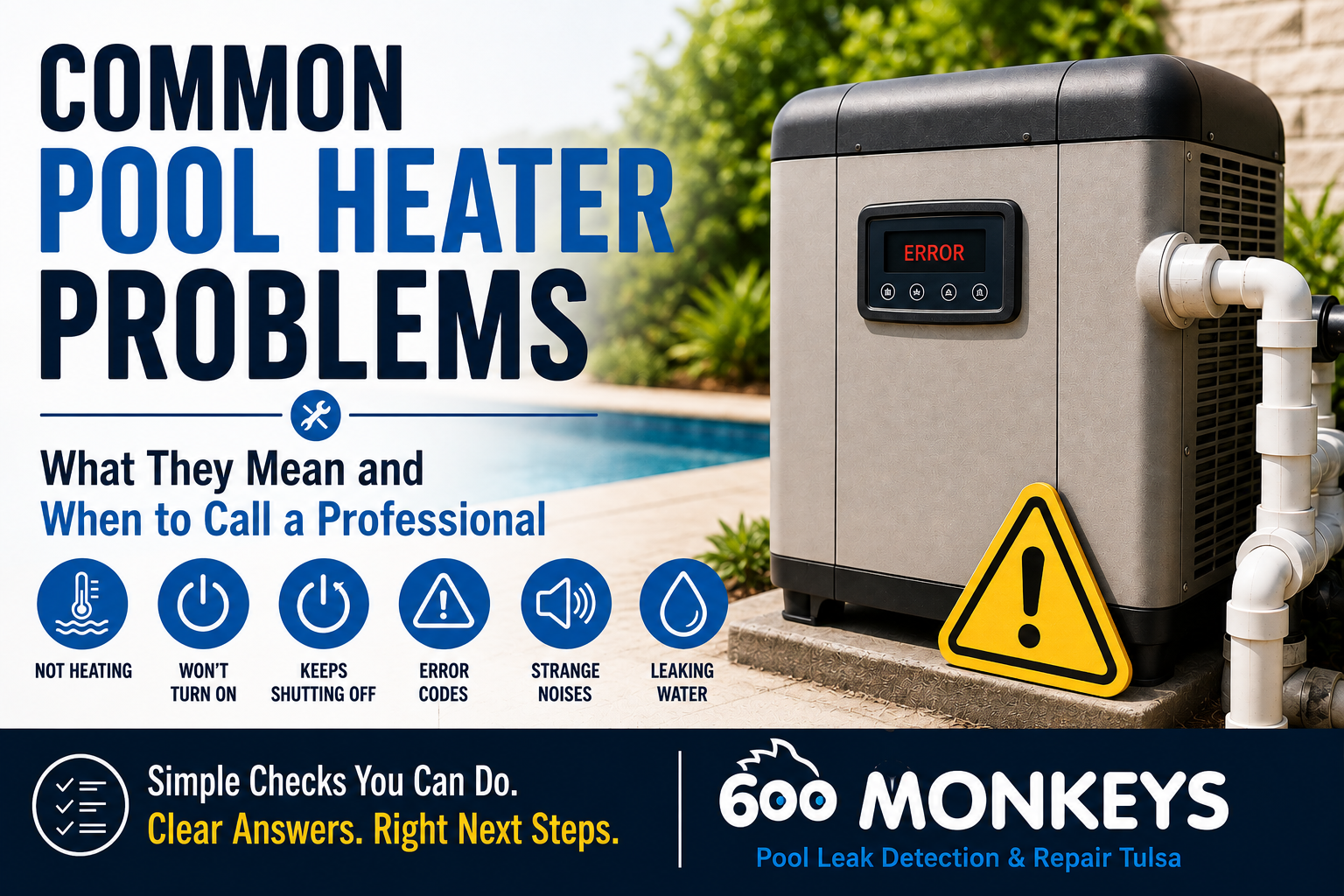
A pool heater can make cooler days much more enjoyable, but problems can quickly become frustrating when the water stays cold or the heater keeps shutting down. Some issues have simple causes, while others need professional attention. Knowing what common Pool Heater Problems mean can help you decide what you can safely check and when it is better to stop troubleshooting.
Pool Heater Is Not Heating
If the heater runs but the water stays cold, check the temperature setting, filter, baskets, and water circulation first. Poor water flow can interfere with normal heating even when the heater itself is working. If the settings are correct and circulation looks normal, the problem may need a closer inspection.
Pool Heater Will Not Turn On
Before assuming the heater has failed, make sure the pool pump is running, the water level is adequate, and the heater controls are set correctly. If everything appears normal but the heater still does not respond, the issue may involve a control, sensor, power supply, ignition system, or another internal component.
Heater Keeps Shutting Off
A heater that starts and then repeatedly shuts down is often responding to an operating problem. Restricted water flow is one possible cause, so check the filter, baskets, and circulation first. If the heater continues cycling on and off after these basic checks, repeatedly restarting it is unlikely to solve the underlying issue.
Pool Heater Shows an Error Code
An error code gives you a useful starting point instead of leaving you to guess. Write down the exact code and check the owner’s manual for your heater model. If the recommended basic steps do not clear the warning or the same code keeps returning, the cause should be properly diagnosed.
Pool Heater Makes Strange Noises
Banging, rattling, whistling, or other new sounds should not be treated as normal. Some noises can be related to water flow, while others may point to a mechanical or heating problem. If the sound continues after basic circulation checks, stop using the heater until the cause is understood.
Water Around the Pool Heater
Water near the heater may come from the unit itself or from nearby plumbing and connections. Look for an obvious source without taking the equipment apart. If the water keeps returning, the leak becomes worse, or you cannot find where it is coming from, the source should be identified before regular heater use continues.
Dirty Filters Affect Heating
A clogged pool filter can reduce water circulation enough to affect heater performance. Cleaning the filter and emptying the skimmer and pump baskets is one of the simplest first steps when heating problems appear. If normal flow returns but the heater still struggles, the filter was probably not the only issue.
Water Chemistry Matters
Poor water chemistry can affect pool equipment as well as the water itself. Conditions that encourage scale buildup or corrosion may shorten the life of heater components over time. Regular testing and balanced water cannot prevent every heater problem, but they can reduce avoidable wear.
Repair or Replace the Heater?
A heater problem does not automatically mean you need a new unit. Repair often makes sense when the heater is otherwise reliable and the faulty component can be reasonably fixed. Replacement may offer better value when breakdowns become frequent, major parts are failing, or repair costs continue to rise.
When to Call a Professional
Homeowners can safely check heater settings, filters, baskets, water levels, and obvious circulation problems. If Pool Heater Problems continue after these checks, or involve persistent leaks, recurring error codes, unusual noises, electrical issues, gas, ignition, or internal components, professional inspection is the better next step.
Final Thoughts
Pool heater trouble does not automatically mean an expensive repair or replacement. Start with the simple things you can safely check and pay attention to what the heater is telling you. Finding the actual cause before replacing parts can save money and help prevent a smaller issue from becoming a bigger problem.
Quick Takeaway
Check water flow, filters, baskets, water level, and heater settings first. If those basics are correct and the problem continues, especially with leaks, error codes, unusual noises, or repeated shutdowns, professional Pool Heater Repair may be the right next step.
Frequently Asked Questions
Why Is My Pool Heater Running but Not Heating?
Check the temperature setting and water circulation first. If both are normal and the water stays cold, the heater may need professional inspection.
Can a Dirty Filter Stop a Pool Heater?
Yes. A clogged filter can restrict water flow and interfere with heater operation. Clean the filter and baskets before assuming the heater has failed.
Why Does My Pool Heater Keep Shutting Off?
Restricted water flow is one possible cause. If cleaning the filter and baskets does not solve it, the heater should be inspected.
Should I Reset a Pool Heater Error Code?
Follow the manufacturer’s reset instructions once. If the same code returns, find the cause instead of repeatedly resetting the heater.
Should I Repair or Replace My Pool Heater?
Repair usually makes sense for an otherwise reliable heater. Replacement may offer better value when failures become frequent or repair costs keep increasing.
Need Pool Heater Repair in Tulsa?
If your pool heater is not warming properly, keeps shutting down, leaks, or shows other warning signs, 600Monkeys provides pool repair services for Tulsa-area homeowners. A professional evaluation can help identify the cause and determine whether repair or replacement makes more sense based on the condition of the equipment.