
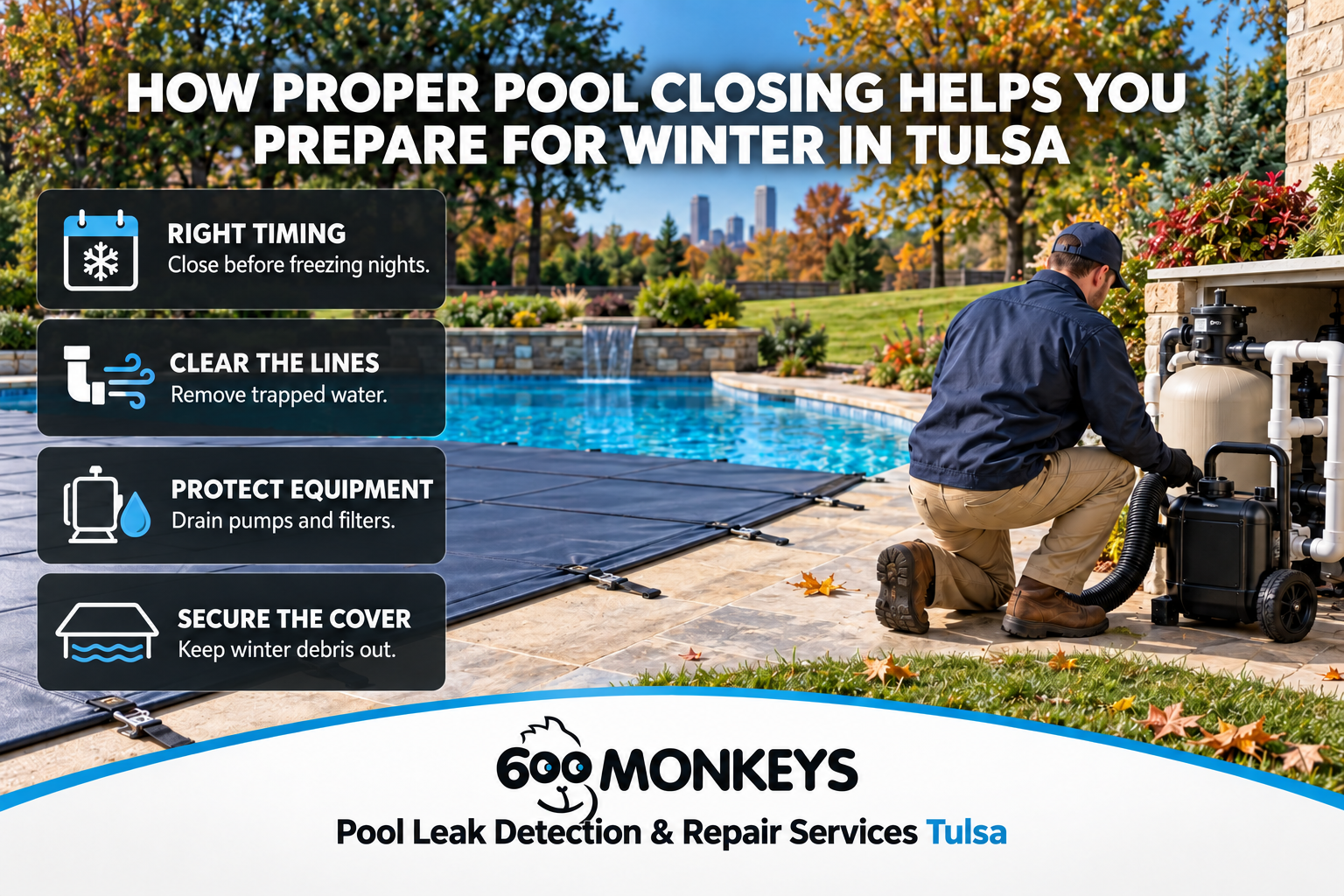
Preparing a swimming pool for winter involves more than cleaning the water and installing a cover. Water left inside the plumbing, pump, filter, or heater may freeze and damage these parts when temperatures fall in Tulsa. Proper pool closing protects the complete system during winter and helps prevent repair work and difficult water problems when the pool is reopened.
When to Close Your Pool
Plan to close your pool after regular swimming has ended but before freezing weather arrives. Closing while the water is still warm may encourage algae to grow beneath the cover. Waiting too long could leave the plumbing and equipment exposed to an early freeze. Since fall temperatures in Tulsa can change quickly, watch the forecast and arrange the closing before colder nights become consistent.
Prepare the Water
The condition of the water at closing affects what you will find in spring. Remove leaves, dirt, and algae before circulation is stopped. The water should also be tested and balanced to protect the pool surface and metal components during winter. Covering dirty or poorly balanced water can lead to stains, scale, algae, and additional cleanup when the pool is reopened.
Protect the Plumbing
Water may remain inside pool lines even after the pump has been switched off. If it freezes, the water expands and may crack a pipe, loosen a fitting, or damage a skimmer connection. Proper pool closing clears vulnerable lines and seals their openings to prevent water from returning. This step is important because underground plumbing damage may not become noticeable until circulation is restored in spring.
Winterize the Equipment
The pump, filter, heater, chlorinator, and connected fittings can also hold water. Each component needs to be drained and prepared according to its design. Turning off the power alone does not protect the equipment from freezing. One cold night in Tulsa may be enough to damage parts that appeared fine when the pool was covered.
Set the Water Level
Closing a pool does not normally require draining it completely. The correct water level depends on the pool design, skimmer protection, plumbing arrangement, and type of cover. Removing too much water may expose the liner or finish and leave the cover without proper support. Leaving the water too high may interfere with the skimmer or cover, so the level should be adjusted for the specific pool.
Secure the Pool Cover
A properly fitted cover helps keep leaves, dirt, and other debris out of the water. It must also remain secure through Tulsa’s winter wind, rain, and occasional snow or ice. Before completing the closing, inspect the straps, anchors, cables, or water bags used to hold the cover. A loose or damaged cover can allow debris into the pool and make spring cleanup more difficult.
Check the Pool During Winter
A closed pool still needs occasional attention. Check the cover after strong wind or heavy rain, remove collected debris, and watch for unusual changes in the water level. You should also inspect the equipment area for loose plugs, visible damage, or unexpected water. These quick checks can reveal a developing problem before it leads to a larger repair.
Prevent Winter Problems
A complete closing helps reduce the risk of frozen plumbing, damaged equipment, stains, algae, and cover problems. It also gives you an opportunity to notice water loss, worn fittings, or equipment concerns before winter. Addressing these issues during closing helps protect the pool through colder weather and makes its return to service less demanding in spring.
Pool Closing FAQs
Do Tulsa pools need to be closed for winter?
Yes. Tulsa may have mild winter days, but temperatures can still fall below freezing. Plumbing and equipment containing water need protection during these colder periods.
Should I wait for the first freeze before closing?
No. Cleaning, water treatment, and equipment preparation should be completed before freezing temperatures arrive.
Can I close a pool that is losing water?
The source of the water loss should be checked first. An active leak may lower the water beyond the level needed to support the cover or protect the pool during winter.
Does a covered pool need attention during winter?
Yes. Check the cover, water level, anchors, and equipment area periodically, especially after strong wind, heavy rain, or freezing weather.
Need Pool Closing Services in Tulsa?
A winter cover protects the surface, but it cannot protect water left inside your pool’s plumbing and equipment. 600Monkeys provides professional pool closing services in Tulsa to prepare the pipes, pump, filter, heater, and water before freezing temperatures arrive. Proper closing keeps your pool protected during winter and helps prevent damage and water problems in spring.