
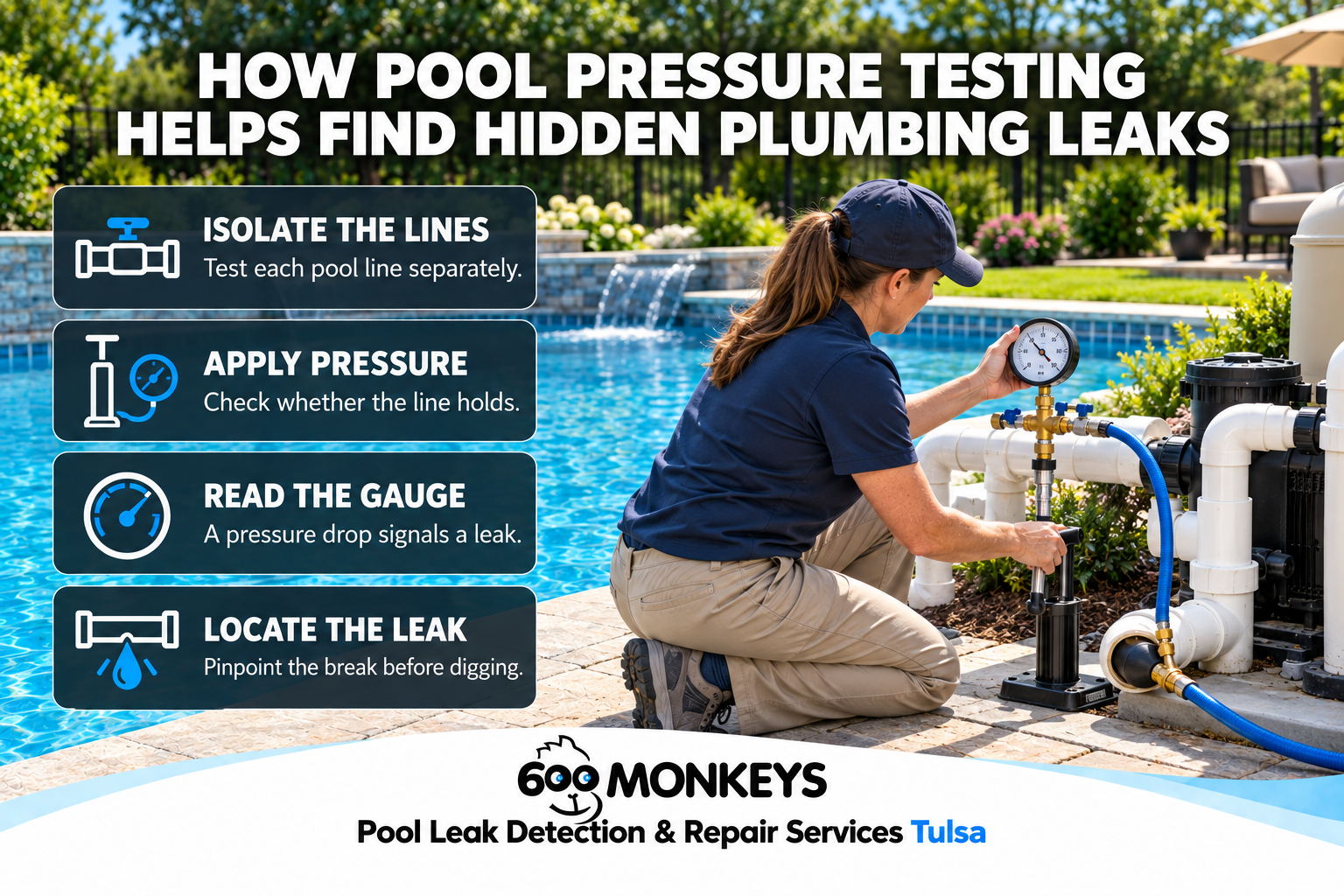
Unexplained water loss does not always leave a visible sign around the pool. When the equipment is dry and no structural damage can be seen, the problem may be inside an underground plumbing line. Pool pressure testing helps determine whether one of these hidden lines is leaking before repairs or excavation are considered.
When Pressure Testing Is Needed
Pressure testing may be recommended after water loss has been confirmed and visible leak sources have been checked. A pool leak or evaporation test can show whether the pool is losing more water than the weather can explain. Air under the pump lid, bubbles from the return jets, poor circulation, or unexplained damp ground may also suggest that a plumbing line needs to be tested.
Pool Lines Included in the Test
Most pools have separate plumbing lines for the skimmer, main drain, return jets, cleaner, spa, and water features. A leak can develop in any of these lines because of a cracked pipe, loose joint, or damaged fitting. Testing each line separately helps identify the affected part of the system without blaming plumbing that is still working properly.
What Happens During the Test
The technician seals the plumbing line at both ends and applies controlled pressure. A gauge is used to check whether the pressure remains steady or begins to fall. The testing plugs and accessible connections are also checked so that a loose seal is not mistaken for an underground pool leak.
What the Results Can Confirm
A steady reading shows that the tested line is holding pressure under the test conditions. A falling reading suggests that air or water is escaping somewhere along the line. This gives the homeowner a useful answer about which part of the pool plumbing requires further investigation.
Locating the Underground Leak
Pool pressure testing can identify the leaking line, but it may not reveal the exact point of damage. The technician may then trace the pipe and use acoustic equipment to listen for air or water escaping underground. Narrowing the location first helps avoid opening several areas of the deck or digging across the yard.
Planning the Right Repair
Once the damaged area has been located, the repair can be planned around the actual problem. A leaking joint may require access to only a small section, while an older or badly damaged line may need a different solution. Tulsa’s clay soil can carry leaking water away from the broken pipe, so damp ground alone should not determine where excavation begins.
Pool Pressure Testing FAQs
Can pressure testing damage older pool pipes?
A professional uses controlled pressure based on the plumbing’s condition. Older or visibly damaged lines should be assessed before testing begins.
Does the pool need to be drained for pressure testing?
Usually, no. Most plumbing lines can be isolated and tested while water remains in the pool, although access and pool design may affect the process.
Can the plumbing pass while the pool still leaks?
Yes. The leak may be in the pool shell, skimmer throat, light niche, fitting, equipment, or another area outside the tested lines.
Will a failed test mean the deck must be opened?
Not immediately. The exact leak location should be narrowed down first so that only the necessary area is disturbed.
Need Pool Pressure Testing in Tulsa?
Repeatedly adding water without knowing where it is going can allow a hidden plumbing problem to continue. 600Monkeys includes pool pressure testing as part of professional pool leak detection to determine whether a skimmer, return, main drain, or another underground line is losing pressure. Once the affected line is confirmed, the team can locate the leak and explain the appropriate repair options before any Tulsa pool deck or surrounding ground is opened.