
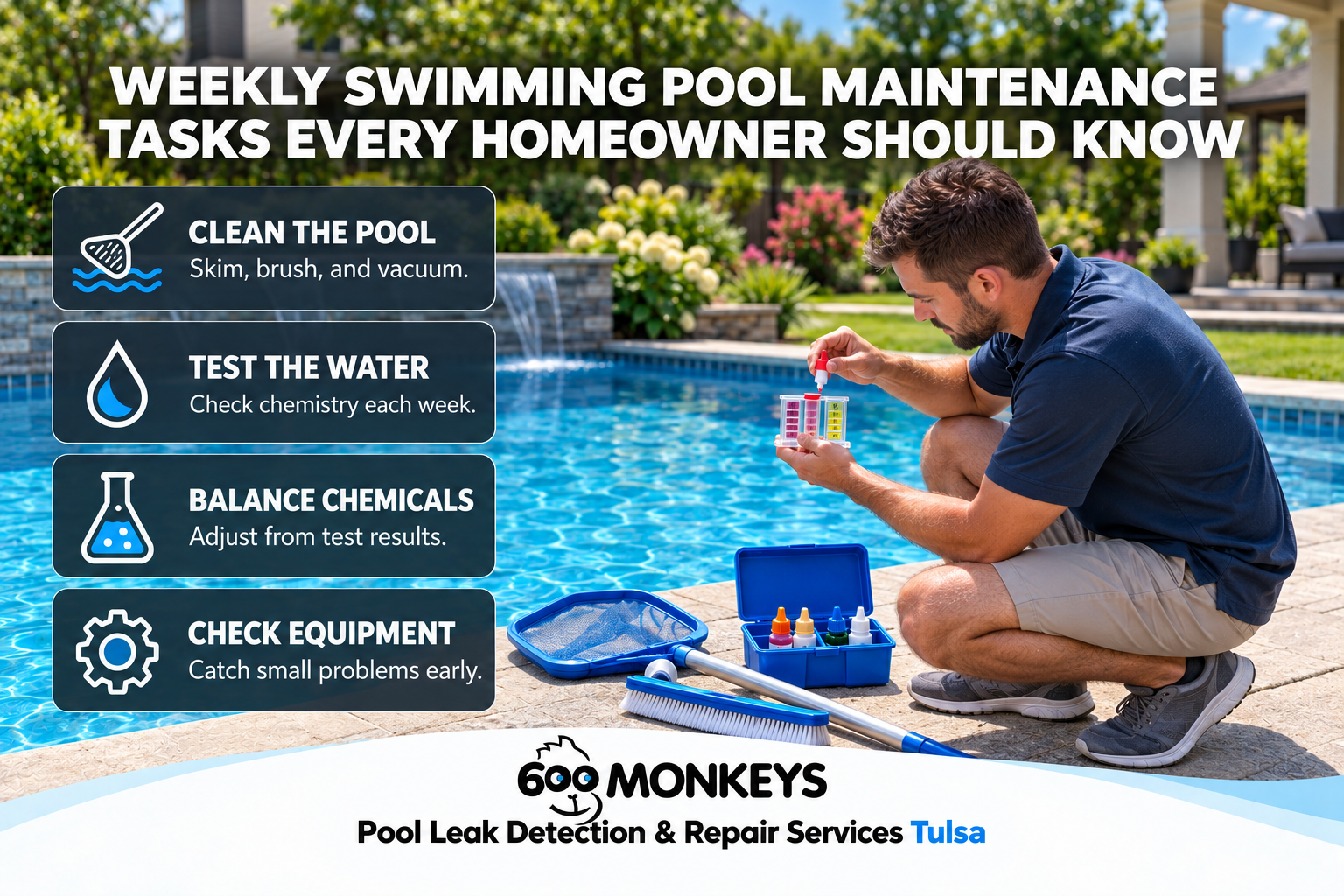
Owning a swimming pool is a great way to relax and enjoy time with family and friends, but it also comes with regular maintenance responsibilities. The good news is that many weekly pool care tasks only take a short amount of time and can help prevent larger problems later. By following a simple routine, homeowners can keep their pools cleaner, safer, and ready to enjoy throughout the swimming season.
Why Weekly Swimming Pool Maintenance Matters
Weekly swimming pool maintenance helps keep your pool water clean, protects expensive equipment, and reduces the risk of unexpected repairs. Small issues, such as clogged baskets or unbalanced water, can quickly turn into larger problems if they are ignored. A consistent routine also makes it easier to spot changes before they become costly.
Check the Pool Water Level
Your pool’s water level should remain around the middle of the skimmer opening. Water that is too low can affect circulation, while water that is too high may reduce the skimmer’s ability to remove floating debris. If you notice your pool requires frequent refilling, it may be worth investigating whether the water loss is greater than normal evaporation.
Empty Skimmer and Pump Baskets
Leaves, insects, and other debris can quickly collect in skimmer and pump baskets. Emptying these baskets every week helps maintain proper water flow and reduces unnecessary strain on your pool equipment. During periods of heavy leaf fall or storms, more frequent cleaning may be necessary.
Brush Pool Walls and Steps
Brushing the pool walls, steps, and corners helps prevent dirt, algae, and other deposits from building up on pool surfaces. Areas with limited water circulation often collect debris more quickly, making regular brushing an important part of routine swimming pool maintenance.
Remove Debris from the Pool
Using a pool net to remove leaves, twigs, and floating debris helps keep the water looking clean while reducing the workload on your filtration system. Vacuuming or using a suitable cleaning device to remove dirt from the pool floor also contributes to better overall water quality.
Test Pool Water Chemistry
Testing your pool water each week helps ensure that important water chemistry levels remain within recommended ranges. Balanced water not only keeps swimming comfortable but also helps protect pool surfaces, equipment, and plumbing from unnecessary wear. If you’re unsure how to interpret the results, it’s often best to seek professional guidance before making significant adjustments.
Inspect Pool Equipment
Take a few minutes each week to visually inspect your pool equipment. Listen for unusual noises, check for visible leaks, and make sure the pump, filter, and other equipment appear to be operating normally. Catching small problems early may help prevent more expensive repairs later.
Clean the Pool Filter When Needed
A clean filter plays an important role in keeping pool water clear. Depending on your filter type and how frequently your pool is used, it may require regular cleaning or maintenance. Following the manufacturer’s maintenance recommendations can help keep the filtration system working efficiently.
Watch for Early Warning Signs
Weekly maintenance is also a good opportunity to look for signs that something may need attention. Unexplained water loss, wet areas around the pool, cracked surfaces, cloudy water, or equipment that isn’t performing as expected should not be ignored. Identifying potential issues early often makes them easier to address.
Weekly Pool Maintenance Checklist
Before finishing your weekly routine, take a moment to confirm you’ve completed these basic tasks:
- Check the pool water level.
- Empty skimmer and pump baskets.
- Brush the pool walls and steps.
- Remove floating debris and clean the pool floor.
- Test the pool water chemistry.
- Inspect pool equipment for unusual signs.
- Clean the filter if maintenance is due.
Final Thoughts
Weekly swimming pool maintenance doesn’t have to be complicated. Spending a little time each week caring for your pool can help improve water quality, protect equipment, and reduce the likelihood of unexpected repairs. A simple routine also gives homeowners greater confidence that their pool is ready whenever it’s time to swim.
Quick Takeaway
Regular maintenance is one of the easiest ways to protect your investment. By following a consistent weekly routine and addressing small issues early, homeowners can often avoid larger maintenance problems while enjoying a cleaner and healthier swimming pool.
Frequently Asked Questions
How often should I perform swimming pool maintenance?
Most basic swimming pool maintenance tasks should be completed at least once each week during the swimming season. Pools that receive heavy use or are exposed to frequent storms may require additional attention.
Why is testing pool water every week important?
Regular testing helps maintain balanced water chemistry, which supports swimmer comfort and helps protect pool surfaces and equipment from unnecessary wear.
How do I know if my pool filter needs cleaning?
Reduced water circulation, higher filter pressure, or cloudy water may indicate that your filter requires maintenance. Always follow the manufacturer’s recommendations for your specific filter type.
What should I do if my pool keeps losing water?
Some water loss is normal because of evaporation, especially during hot weather. However, if your pool requires frequent refilling or loses more water than expected, it may be time to investigate the cause.
Can regular maintenance reduce repair costs?
Routine maintenance helps identify small issues before they become larger problems. While it cannot prevent every repair, it can reduce unnecessary wear on your pool and its equipment over time.
Need Professional Pool Maintenance in Tulsa?
If you’re finding it difficult to keep up with routine pool care or you’ve noticed signs that concern you, professional assistance may be the right next step. For homeowners in the Tulsa area, 600Monkeys provides a range of pool maintenance and repair services, including Pool Equipment Repair when equipment problems are identified during an inspection.