
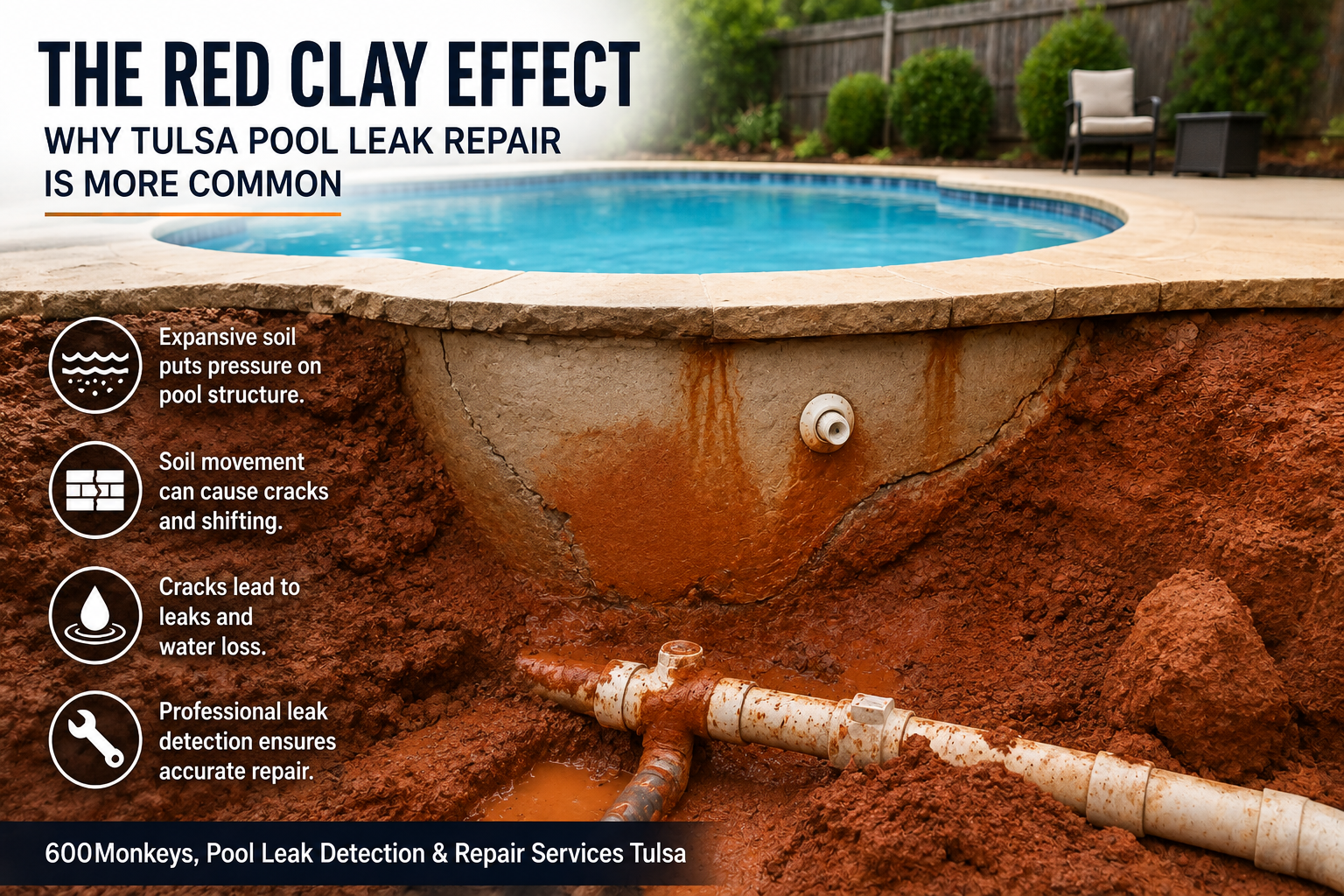
Why Tulsa’s Red Dirt is So Hard on Swimming Pools
Getting to Know Oklahoma Soil
If you have spent any time in Tulsa, you have seen the red dirt. It stains your sneakers and covers your car after a rainstorm. This is not just regular dirt that you might find in other states. It is a very heavy type of red clay. It is thick and sticky, which is the opposite of the loose sand you see at the beach. Because it is so dense, it behaves in a very specific way when the weather changes.
The Giant Sponge in Your Yard
The most important thing to understand about red clay is how it handles water. You can think of the ground in your backyard like a giant, heavy sponge. When a sponge is dry, it is small and tough. When you soak it in water, it grows much larger and gets heavy. The red clay under your pool does the same thing every time we get a big Oklahoma rainstorm.
The Game of Swelling and Pushing
When it rains for several days, the clay soaks up the moisture and expands. As the soil grows, it needs somewhere to go. It starts pushing outward with a huge amount of force. Since your swimming pool is buried right in that soil, the clay pushes directly against the sides of your pool. This puts a massive amount of pressure on the structure that it was not necessarily designed to handle all the time.
What Happens During a Drought
The problem does not stop when the rain ends. When the hot Tulsa sun comes out and the ground dries up, the clay loses all that water. It begins to shrink and pull away. If you walk across a field during a dry summer, you will see deep cracks in the dirt. This means the soil is pulling back from your pool walls. This leaves your pool sitting in a hole without the dirt supporting it like it should.
The Problem with Rigid Concrete
Most in-ground pools are made of concrete. Concrete is a fantastic material because it is very strong, but it has one big weakness: it is not flexible. It does not like to bend or twist. When the red clay pushes and pulls over and over again, the concrete gets stressed. Eventually, that stress becomes too much. The concrete cannot move with the soil, so it ends up cracking instead.
Hidden Danger for Your Pipes
It is not just the big concrete bowl that has to deal with the moving dirt. Your pool has a lot of plastic pipes buried underground. These pipes carry water to your pump and filter. As the heavy red clay shifts up and down, it can actually grab these pipes and snap them. This is how many hidden leaks start. You might not see a puddle on the surface, but the water is escaping deep underground where the dirt shifted.
Signs Your Pool is Struggling
Because our soil is so active, you have to be a bit of a detective. If you notice that you are adding more water than usual, you might have a problem. Keep an eye out for areas in your grass that stay wet even when it is sunny. You should also look for new cracks in the tile or the plaster. These are often the first clues that the moving red clay has caused some damage to your system.
Protecting Your Backyard Investment
If you think the shifting ground has caused a problem, you should act quickly. Small cracks can turn into huge holes if the water keeps washing away the dirt behind them. It is always a good idea to have an expert come out and take a look. Calling a team for a professional Pool Leak Repair will help you find the trouble spots and fix them before they get worse, making sure your pool stays safe for the whole summer.