
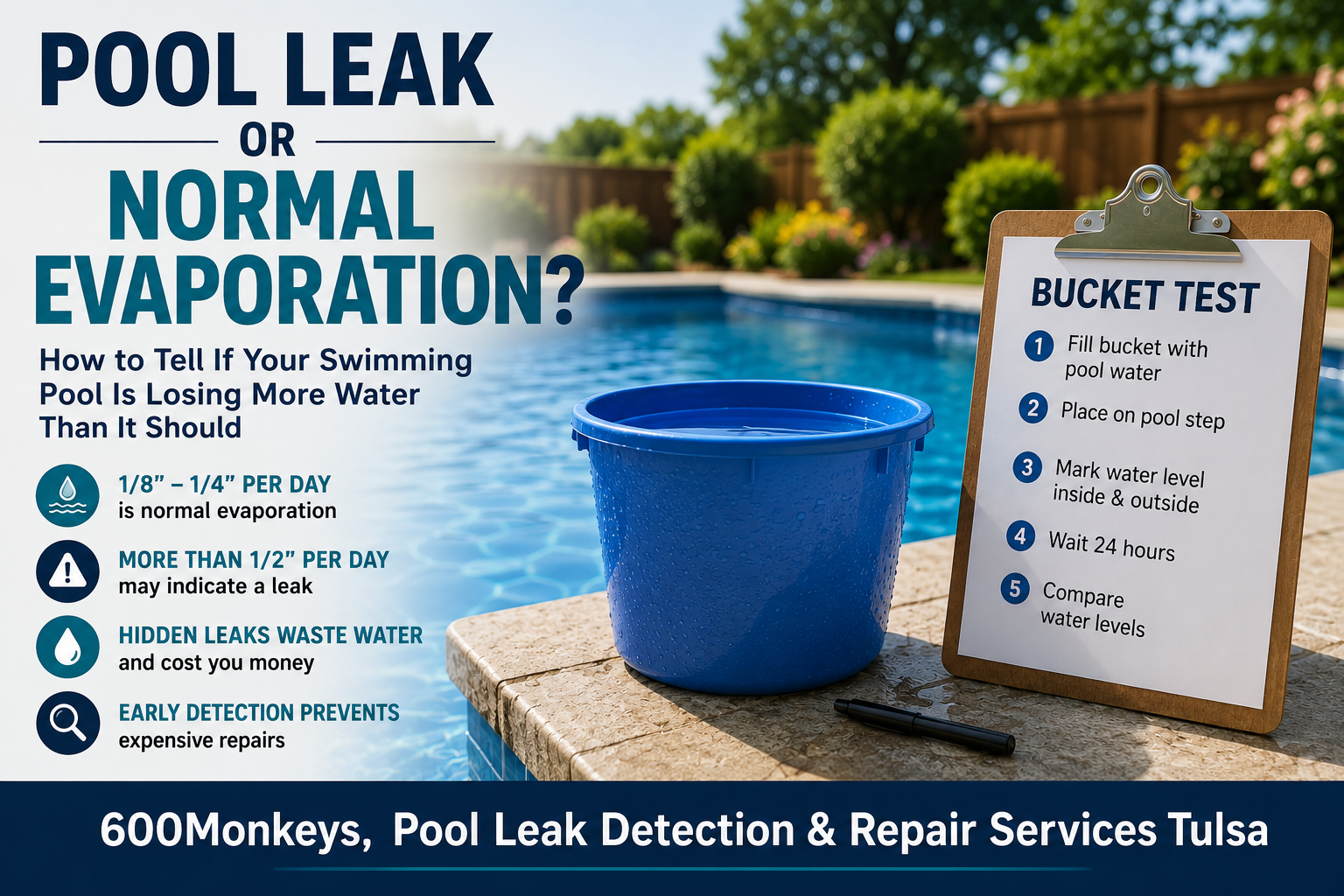
Seeing your pool’s water level drop can be frustrating, especially during Oklahoma’s hot summer months. While every swimming pool loses some water through natural evaporation, excessive water loss may be a sign of a hidden leak that can lead to higher water bills, plumbing damage, or costly structural repairs. Knowing how to distinguish normal evaporation from a leak can help you protect your investment and avoid unnecessary expenses.
How Much Water Loss Is Normal?
Every swimming pool loses a small amount of water each day through evaporation. Under normal conditions, most pools lose between 1/8 and 1/4 inch of water per day. During periods of extreme heat, strong winds, low humidity, or heavy pool use, water loss may increase to about 1/2 inch per day. If your pool consistently loses more water than this, it’s time to determine whether a leak may be the cause.
What Increases Water Evaporation?
Weather has the greatest impact on pool water evaporation. Oklahoma’s hot summers, direct sunlight, dry air, and windy conditions can all increase water loss. Heated pools, waterfalls, fountains, and frequent swimming can also contribute to faster evaporation. Although these factors can noticeably lower your pool’s water level, they should not cause continuous or excessive water loss.
Signs Your Pool May Have a Leak
A hidden pool leak usually causes more than just a lower water level. You may find yourself adding water every few days, notice soggy areas around the pool, see cracks in the pool shell or deck, or experience a pool pump that frequently loses prime. Air bubbles coming from the return jets, an unexplained increase in your water bill, or difficulty maintaining proper pool chemistry are also common warning signs. If you notice several of these symptoms together, a professional leak inspection is recommended.
Performing the Bucket Test
The bucket test is one of the easiest ways to determine whether your pool is losing water because of evaporation or a leak. Fill a bucket with pool water until the water level inside matches the water level in the pool, then place the bucket on a pool step so it is partially submerged. Leave both undisturbed for 24 hours without adding water to the pool. If the pool water drops noticeably more than the water inside the bucket, your pool is likely losing water through a leak rather than normal evaporation. While this simple test cannot identify where the leak is located, it can help you decide whether further investigation is necessary.
Why Small Leaks Shouldn’t Be Ignored
Even a slow leak can waste thousands of gallons of water over time. More importantly, escaping water can erode the soil beneath your pool, damage underground plumbing, weaken the surrounding deck, and eventually contribute to structural problems. Addressing a leak early is almost always faster, easier, and less expensive than repairing extensive damage later.
When to Call a Leak Detection Specialist
If the bucket test suggests excessive water loss or your pool shows several signs of a leak, it’s time to contact a professional. Modern leak detection methods use advanced tools such as pressure testing, electronic listening equipment, and dye testing to accurately locate leaks in underground plumbing, pool equipment, skimmers, fittings, and structural components. Professional testing removes the guesswork and allows repairs to focus only on the affected area.
Reducing Water Loss
Although evaporation cannot be eliminated completely, there are several ways to reduce unnecessary water loss. Using a pool cover when the pool is not in use, repairing damaged equipment promptly, limiting water feature operation during extremely hot weather, and monitoring your pool’s water level regularly can all help conserve water. These simple habits also make it easier to recognize when water loss is no longer normal.
Final Thoughts
Some water loss is a normal part of owning a swimming pool, especially during Oklahoma’s warmest months. However, if your pool is losing more water than expected or showing other warning signs, it’s important not to ignore the problem. A simple bucket test is an excellent first step, but professional leak detection is the most reliable way to identify hidden plumbing or structural issues before they become expensive repairs.
Need Professional Leak Detection?
If your swimming pool is losing more water than normal evaporation can explain, the experienced team at 600Monkeys can help. Using advanced leak detection equipment and proven diagnostic methods, they can accurately locate hidden leaks in your pool’s plumbing, equipment, or structure and recommend the most effective repair solution.
Frequently Asked Questions
How much water loss is normal for a swimming pool?
Most swimming pools lose between 1/8 and 1/4 inch of water per day through normal evaporation. During very hot or windy weather, water loss may increase to about 1/2 inch per day.
Can Oklahoma weather increase pool evaporation?
Yes. High temperatures, strong sunlight, low humidity, and windy conditions can all increase the rate of evaporation, particularly during Oklahoma’s summer months.
What is the easiest way to check for a pool leak?
The bucket test is one of the simplest methods. If the water level in the pool drops significantly more than the water level inside the bucket, a leak is the likely cause.
Can a small pool leak become a serious problem?
Yes. Even a minor leak can waste a significant amount of water and eventually lead to plumbing damage, soil erosion, deck movement, or structural issues if left unrepaired.
When should I schedule professional leak detection?
If your pool requires frequent refilling, loses more water than normal evaporation can explain, or shows signs such as wet spots, cracks, air bubbles, or rising water bills, professional pool leak detection is the best way to identify the source of the problem.