
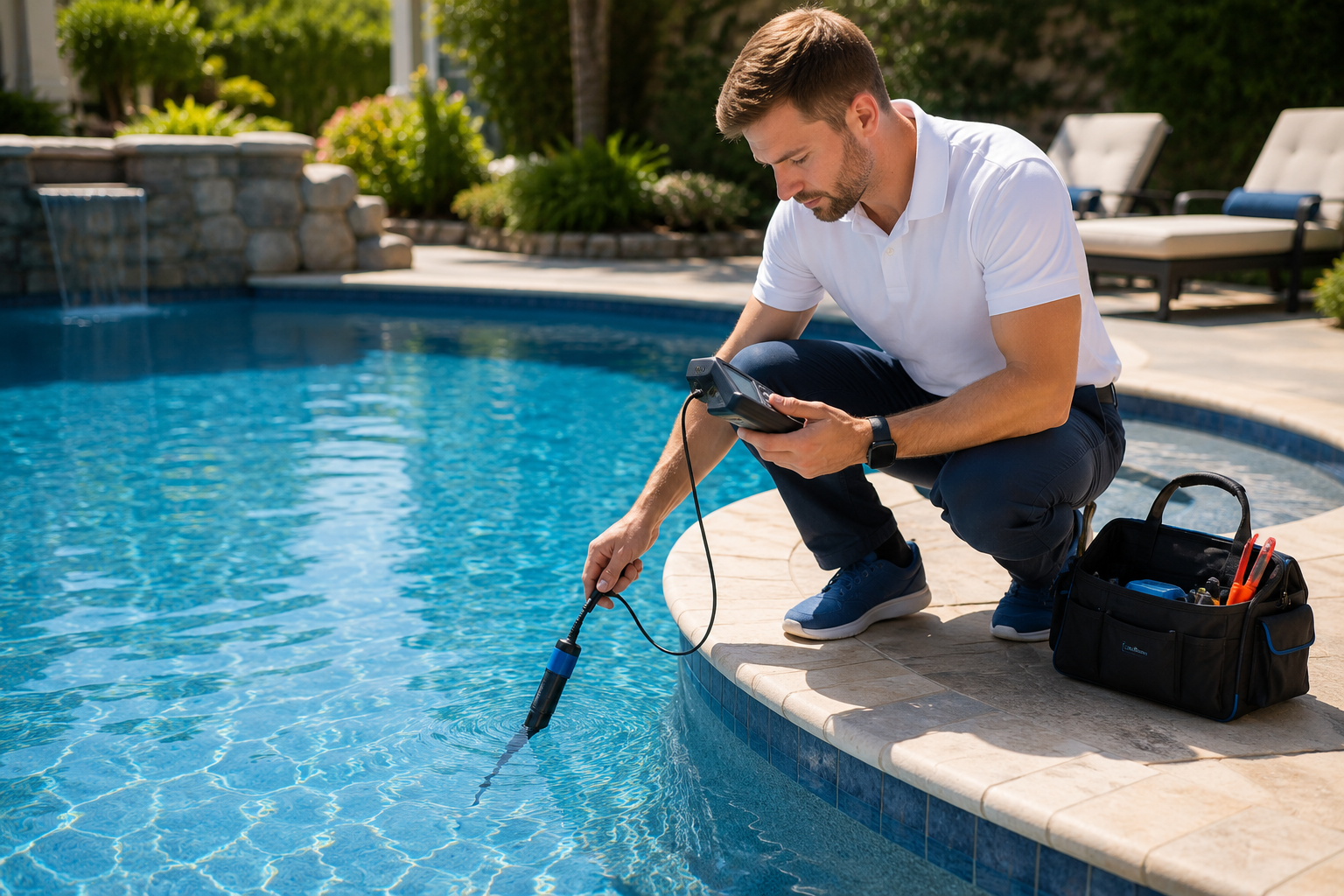
Finding out your swimming pool is losing water is frustrating, but locating the source of the problem is rarely as simple as spotting a crack or puddle. Some leaks are easy to see, while others remain hidden inside plumbing lines or structural components. Understanding how professional pool leak detection works can help homeowners know what to expect and why an accurate diagnosis is the first step toward an effective repair.
Why Pool Leak Detection Matters
Not every drop in your pool’s water level means there’s a leak. Hot weather, wind, and regular pool use can all cause water to evaporate naturally. However, when water loss becomes excessive or is accompanied by other warning signs, professional pool leak detection can help determine whether the problem is caused by normal conditions or a hidden leak that requires attention.
Pool Leak Inspection
A professional pool leak inspection usually begins with a careful visual assessment of the entire pool and its surrounding area. The technician may look for visible cracks, damaged fittings, unusual wet spots, water level changes, or signs that suggest where water could be escaping. The exact inspection process can vary depending on the type of pool and the symptoms being reported, but the goal is always to narrow down the possible source of the problem before additional testing begins.
Pool Leak Diagnosis
If a visual inspection does not clearly identify the cause of the water loss, additional diagnostic methods may be used. Depending on the situation, professionals may inspect the pool’s plumbing system, structural components, skimmers, returns, lights, or other areas where leaks commonly occur. The appropriate testing method varies from one pool to another, and several techniques may be combined to accurately determine the source of the leak.
Why an Accurate Pool Leak Diagnosis Is Important
Finding the exact location of a leak is often more important than repairing it immediately. An accurate diagnosis helps prevent unnecessary digging, replacing parts that are still in good condition, or making repairs that fail to solve the problem. It also allows homeowners to understand the scope of the issue before deciding on the most appropriate repair option.
What Happens After Pool Leak Detection?
Once the source of the leak has been identified, the next step is discussing the available repair options. The recommended solution depends on where the leak is located, how severe it is, and the overall condition of the pool. In some cases, repairs may be relatively simple, while other situations may require more extensive work. Understanding the diagnosis helps homeowners make informed decisions instead of relying on guesswork.
When to Schedule Pool Leak Detection
If your pool requires frequent refilling, develops unexplained wet areas nearby, or loses more water than normal evaporation can explain, it may be time to schedule a professional inspection. Early diagnosis can help reduce water waste and prevent small problems from developing into more expensive repairs.
Final Thoughts
Professional pool leak detection is designed to identify the source of unexplained water loss as accurately as possible. While every pool is different, a systematic inspection and diagnosis can help determine whether the issue involves the pool structure, plumbing, or another component. The sooner a potential leak is investigated, the easier it is to understand the problem and plan the appropriate repair.
Need Professional Pool Leak Detection in Tulsa?
If you’re concerned about unexplained pool water loss, consider scheduling a professional Pool Leak Detection service. A proper inspection can help determine whether your pool is losing water because of a hidden leak or normal evaporation. For homeowners in the Tulsa, Oklahoma area, 600Monkeys provides professional pool leak detection and repair services to help identify problems and recommend appropriate solutions based on the condition of your pool.
Frequently Asked Questions
How long does a pool leak inspection usually take?
The time varies depending on the size of the pool, its design, and the symptoms being investigated. Some inspections are completed relatively quickly, while more complex situations may require additional testing.
Can every pool leak be found during one inspection?
Many leaks can be identified during the initial inspection, but some situations require additional diagnostic work. The exact process depends on the type and location of the suspected leak.
Does every pool leak require major repairs?
No. Some leaks involve minor repairs, while others may require more extensive work. The appropriate solution depends on the results of the inspection and diagnosis.
Should I schedule pool leak detection if I’m unsure there’s a leak?
If your pool consistently loses more water than expected or you notice signs that concern you, a professional inspection can help determine whether a leak is present and whether further action is needed.