
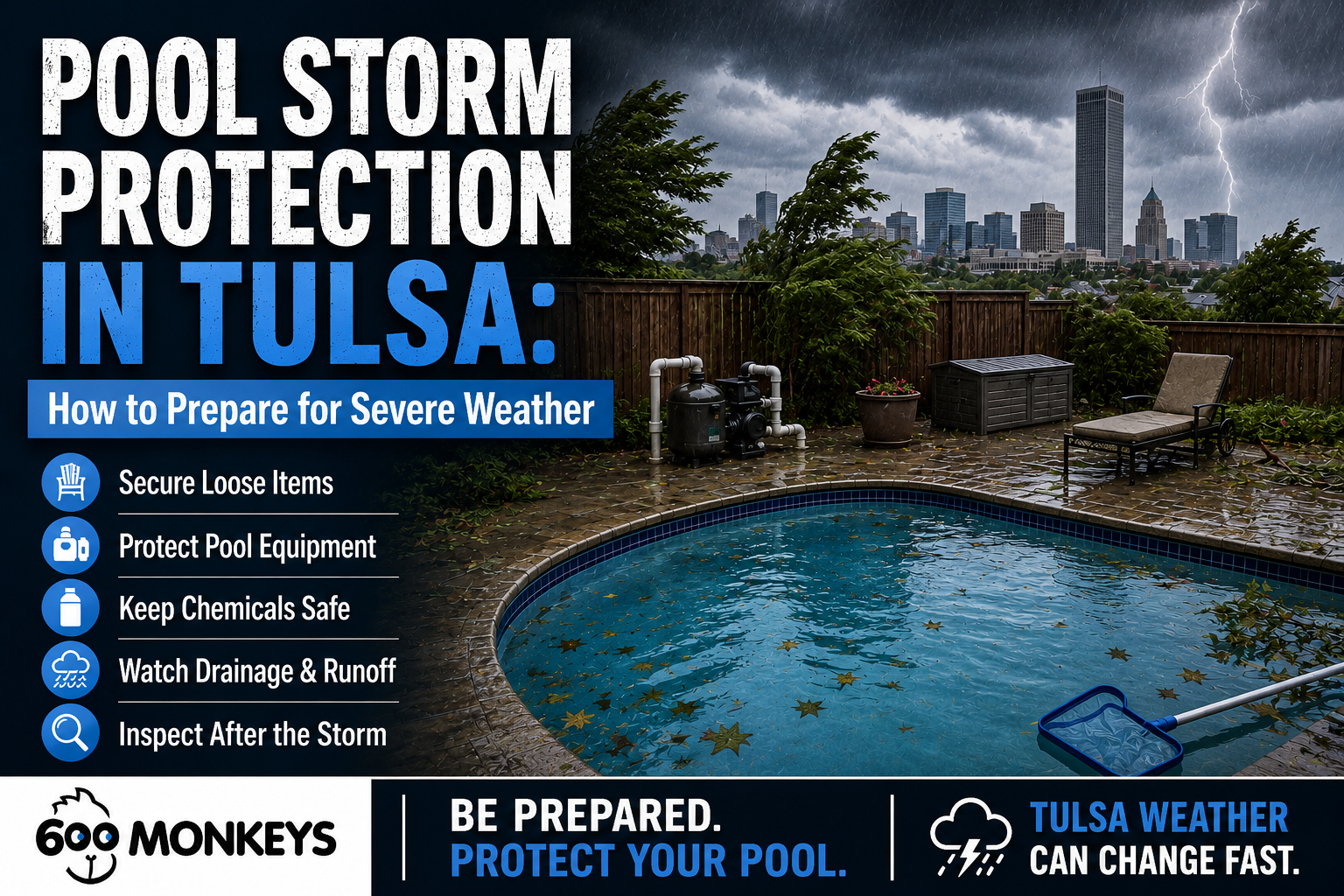
Pool Storm Protection in Tulsa: How to Prepare for Severe Weather
Tulsa weather can change fast. One minute the pool area may be calm, and the next you could be dealing with heavy rain, strong winds, hail, or flying debris. A major storm can leave behind a lot more than dirty pool water. Taking a few simple steps before severe weather arrives can make the cleanup easier and help you notice problems that need attention.
Why Pool Storm Protection Matters
A swimming pool can take a beating during a strong storm. Wind can move furniture and other loose items, while heavy rain can carry dirt, leaves, and debris into the pool. In some areas, runoff can also collect around the pool. Preparing ahead of time won’t stop every problem, but it can reduce some of the mess and damage a storm may leave behind.
Secure the Pool Area
Start by looking around the pool and removing anything that could be picked up by strong wind. Patio chairs, umbrellas, toys, decorations, and lightweight equipment can end up in the pool or hit something nearby. If you can bring these items indoors, that’s usually a better option than leaving them beside the pool.
Check Pool Equipment
Before a storm, take a quick look at the area around your pool equipment. Make sure there aren’t loose objects that could blow into pumps, filters, heaters, or other components. If flooding or electrical problems are a possibility, put safety first and follow the manufacturer’s instructions for your equipment rather than taking unnecessary risks.
Don’t Drain the Pool
It may seem like lowering the water level before heavy rain would prevent the pool from overflowing, but draining a pool isn’t always the right answer. The risks can vary depending on the pool’s construction, surrounding ground conditions, drainage, and the amount of rainfall expected. It’s better to understand those factors before making a major change to the water level.
Watch Where Stormwater Goes
Heavy rain can move a surprising amount of dirt through a yard. Soil, grass, leaves, and other debris can be carried toward the pool when water starts moving across the property. If your pool area tends to collect runoff, knowing where that water comes from and where it goes can help you identify potential trouble spots.
Keep Pool Chemicals Safe
Pool chemicals should always be stored in an appropriate and secure location. Before severe weather, make sure containers are protected from areas where floodwater or heavy runoff could reach them. Keeping chemicals away from stormwater also helps prevent them from being carried into drainage areas or other parts of the property.
Check the Pool After the Storm
Once the storm has passed and it is safe to go outside, start with a quick walk around the pool. Look for branches, leaves, damaged items, unusual water levels, or anything that wasn’t there before the storm. You don’t have to diagnose every problem yourself. The first step is simply noticing that something has changed.
Check Pool Water Quality
A large amount of rain can change the condition of pool water, especially when dirt and other debris enter the pool. If the water looks cloudy, dirty, or different than it did before the storm, check its condition before swimming. A little attention at this stage can make it easier to get the pool back to normal.
Look for Pool Damage
Storm damage isn’t always obvious. A quick inspection of the pool surface, deck, equipment area, and visible connections may reveal cracks, damaged components, unusual leaks, or other changes. Pay attention to the water level too. If the pool starts losing more water than you normally expect after a storm, don’t automatically assume it’s just evaporation.
Know When to Get Help
Some storm cleanup is straightforward. You can remove leaves, clean the pool, and check the water as part of normal maintenance. But if you find damaged equipment, unexplained water loss, a suspected leak, or another problem that doesn’t go away, it may be time to have it looked at. Knowing what caused the problem is usually better than guessing at a repair.
Final Thoughts
You can’t control Tulsa’s weather, but you can be prepared for what a severe storm may do to your swimming pool. Securing loose items, protecting pool chemicals, watching runoff, and checking the pool after the storm are simple steps that can help. Pool Storm Protection isn’t about making your pool completely storm-proof. It’s about reducing avoidable problems and knowing what to look for when the weather clears.
Quick Takeaway
Before severe weather arrives, secure loose items around the pool and make sure chemicals and equipment are in a safe position. After the storm, wait until conditions are safe and check for debris, water-quality changes, unusual water loss, equipment problems, and visible damage before getting the pool back into regular use.
Need Pool Repair in Tulsa?
If your pool develops unusual water loss, equipment problems, visible damage, or other concerns after severe weather, professional help can make it easier to understand what needs attention. 600Monkeys provides pool repair and related services for homeowners in the Tulsa area based on the condition and needs of each pool.
Frequently Asked Questions
Should I Cover My Pool Before a Severe Storm?
A properly fitted pool cover may help keep some debris out, but the best approach depends on the type of cover and the expected weather. Always use your cover according to its intended purpose and the manufacturer’s instructions.
Should I Turn Off My Pool Equipment During a Storm?
There isn’t one answer that applies to every pool and every storm. Follow the manufacturer’s safety instructions for your equipment, and if flooding or electrical damage is possible, put safety first and avoid operating equipment that appears damaged.
Should I Lower My Pool Water Before Heavy Rain?
Not necessarily. Lowering the water level without considering the pool’s construction and surrounding drainage can create other problems. If you’re unsure, it’s better to understand the potential risks before making a significant change.
What Should I Do If Stormwater Gets Into My Pool?
Wait until the area is safe, then remove visible debris and check the water. Heavy runoff can bring dirt and other unwanted material into the pool, so testing the water before swimming may be appropriate.
What If My Pool Starts Losing Water After a Storm?
Keep an eye on the water level and consider whether the amount of loss is normal for the weather conditions. If your pool continues losing more water than expected, or the loss seems unusual, it may be worth having the cause investigated.