
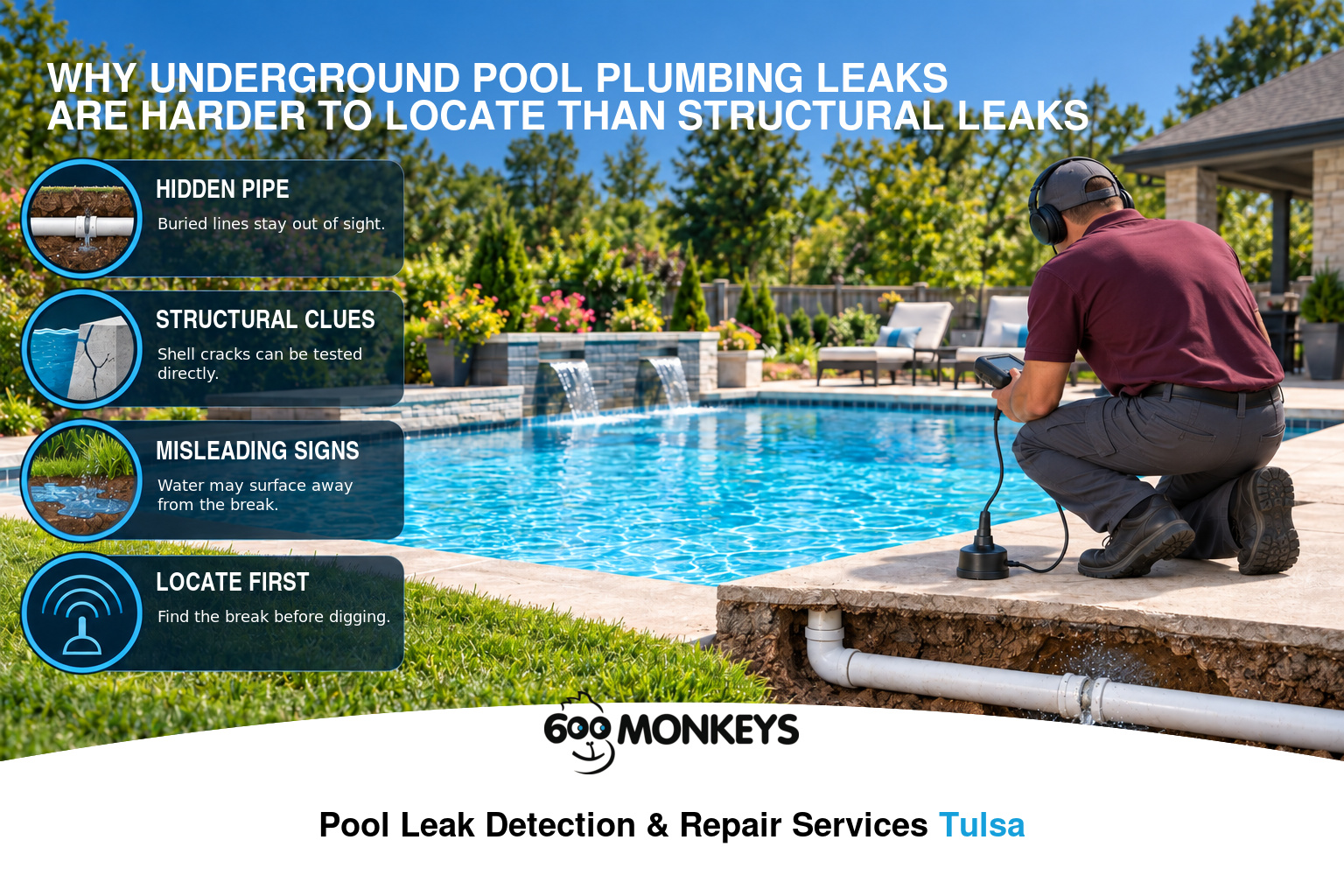
When your pool keeps losing water but no source is visible, the problem may be inside a pipe buried beneath the deck or yard. Structural leaks often provide an accessible area to inspect, while pool plumbing leaks leave fewer useful clues. This is why underground plumbing usually takes more time and testing to locate.
Where Pool Water Escapes
Water can leave a pool through a crack in the shell, a worn seal, a loose fitting, leaking equipment, or damaged plumbing. Structural leaks affect the pool shell itself. Skimmers, lights, drains, and return fittings are separate leak points, but they are usually accessible for inspection. Underground pipes are different because they may be covered by soil, concrete, grass, or landscaping.
Why Pool Pipes Stay Hidden
A buried pipe can crack or separate at a joint without creating an obvious problem at the surface. You might notice the water level falling, air entering the system, weaker return flow, or difficulty keeping the pump primed. These signs tell you something is wrong, but they do not show which pipe is leaking or where the break is located.
Pool Leak Signs Can Mislead
Even a damp area in the yard may not lead you to the damaged pipe. Water can follow the plumbing, spread through loose soil, or collect several feet away from the break. It can also drain deeper into the ground without leaving a puddle. Digging where the soil looks wet can therefore damage the yard or deck without uncovering the actual leak.
Structural Pool Leaks
A structural leak often gives technicians a better place to begin looking. A crack in the pool shell can be inspected and tested directly to see whether it is drawing water. Not every visible crack leaks, and some shell damage is difficult to see, but the area is still more accessible than a pipe buried beneath the deck. Leaks around skimmers, lights, and fittings can also be checked directly, even though they are not classified as structural damage.
Finding the Leaking Pipe
Testing begins by checking the plumbing lines separately. If one line cannot hold pressure, the technician knows that line is leaking. Pressure testing does not show the exact location of the break, so listening or tracing equipment is used next to narrow down the area. Our guide to electronic pool leak detection explains how escaping water can be located beneath soil or concrete without opening the entire deck.
Find the Leak Before Digging
Once the leaking pipe and likely break location are known, the repair can focus on a much smaller area. This avoids opening concrete based on a guess and helps protect nearby plumbing that is still working. If your pool is losing water and no visible source explains it, check the equipment for obvious drips, keep the water at a safe operating level, and arrange professional pool leak detection before digging or draining the pool.
FAQs About Pool Plumbing Leaks
Can pressure testing find the exact break?
No. It identifies which plumbing line is leaking. Other locating equipment is then used to find the break along that line.
Does wet ground show where I should dig?
Not reliably. Water can travel through the soil and appear away from the damaged pipe.
Is every crack in the pool shell a leak?
No. Some cracks only affect the surface finish. Testing is needed to show whether water is escaping through the crack.
Will the whole pool deck need to be removed?
Usually not. Locating the break first allows the repair team to open only the area needed to reach the damaged pipe.
Need Pool Leak Detection & Repair Services in Tulsa?
When your pool continues losing water but nothing around it looks damaged, the source may be hidden in the shell, a fitting, or underground plumbing. 600Monkeys provides professional pool leak detection to find the problem before unnecessary digging begins. If a repair is needed, our pool leak repair services can address the confirmed source and help protect the surrounding deck and property.