
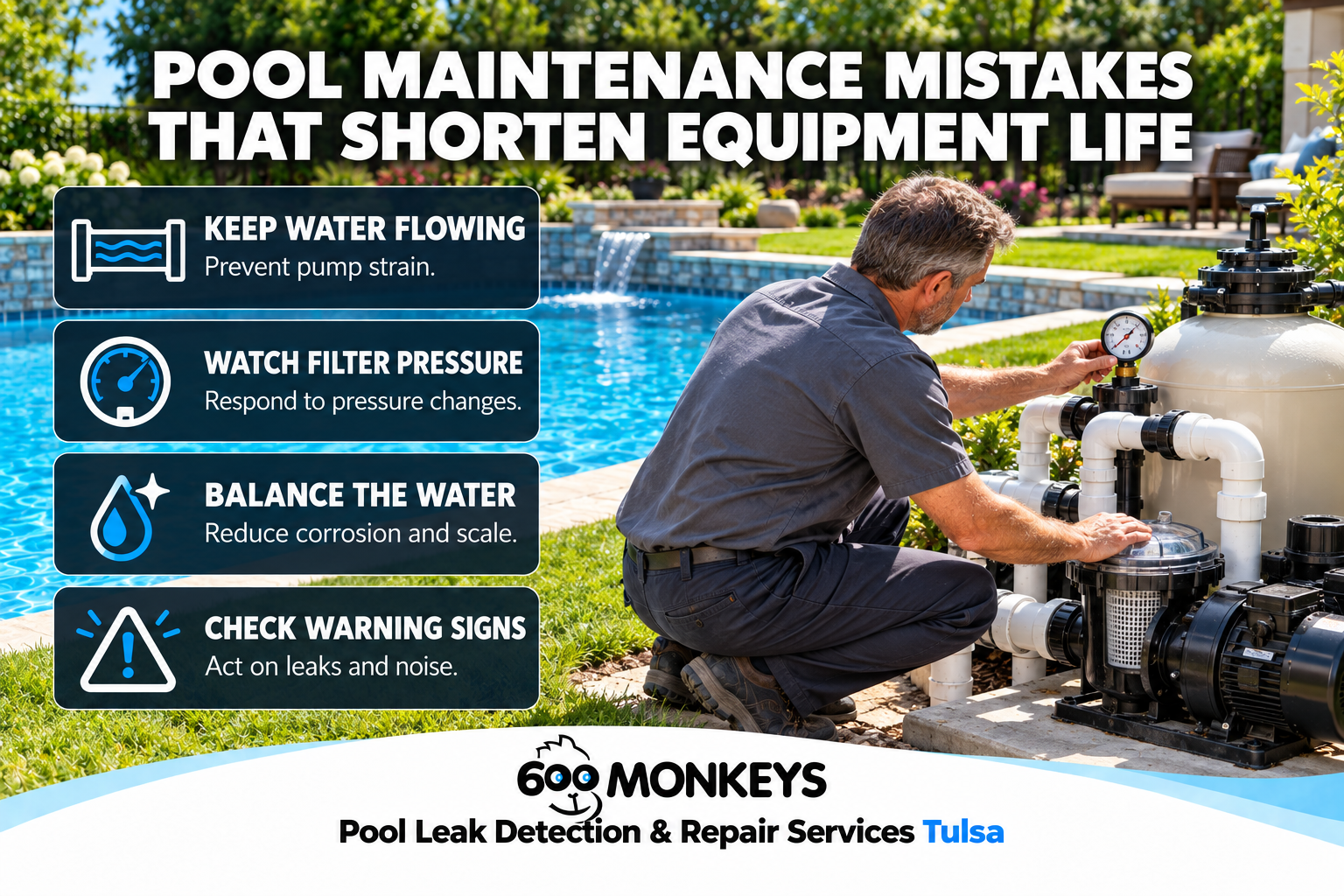
Pool equipment often fails after operating under poor conditions for weeks or months. Restricted water flow, trapped air, incorrect settings, and unbalanced water can damage parts even while the system appears to be working. Avoiding these pool maintenance mistakes can reduce unnecessary wear and early equipment replacement.
Poor Water Flow
A pool pump needs a steady water supply for cooling and lubrication. Low water, clogged baskets, closed valves, or a suction leak can introduce air and cause the pump to lose prime. Stop the system if the pump sounds rough, runs dry, or repeatedly fills with air.
Pressure Changes
A filter gauge should be compared with its reading immediately after cleaning. Rising pressure can indicate trapped debris, while unusually low pressure may point to restricted suction, an air leak, or a pump problem. Check the water flow before assuming the filter only needs cleaning.
Wrong Filter Cleaning
Sand, cartridge, and DE (Diatomaceous Earth) filters require different care. Excessive backwashing can reduce filtration quality, while rough cleaning can damage cartridge pleats. Follow the correct method and release all pressure before opening the filter tank.
Unbalanced Water
Clear water may still contain conditions that damage equipment. Acidic water can corrode heater parts and metal fittings, while mineral buildup can restrict heaters, salt cells, and plumbing. Test the full water balance and adjust it based on accurate results.
Incorrect Chemical Use
Adding concentrated chemicals through the skimmer may send them directly into the pump, filter, and heater. This can damage seals, metals, and internal surfaces. Follow the product label, use the recommended application point, and never mix pool chemicals.
Fixed Pump Schedules
One pump setting may not suit the pool throughout the year. Too little circulation affects filtration, while unnecessarily high-speed operation increases energy use and equipment demand. Adjust the schedule for water temperature, swimmer use, debris, and connected features.
Valve Mistakes
A filter’s multiport valve should not be moved while the pump is running. Pressure inside the system can damage the valve gasket or prevent the valve from sealing correctly. Turn off the pump and let the equipment stop before changing the valve position.
Ignored Warning Signs
Leaks, air under the pump lid, vibration, unusual noise, and repeated heater shutdowns should not be dismissed. These changes may point to restricted flow, a failing seal, or another developing fault. Include an equipment check in your weekly pool maintenance routine.
Pool Maintenance FAQs
Why does filter pressure rise soon after cleaning?
Heavy debris, algae, incorrect cleaning, or a circulation problem may be responsible. Check the filter, water condition, and return flow together.
Can a pump suffer damage while still moving water?
Yes. Trapped air, restricted flow, cavitation, or a leaking seal can damage parts before the pump stops working.
Is low filter pressure better than high pressure?
No. Low pressure may indicate poor water supply, an obstruction, an air leak, or reduced pump performance.
Can poor water balance damage a pool heater?
Yes. Corrosion and scale can damage the heat exchanger, restrict water flow, and reduce heating efficiency.
Need Professional Pool Maintenance?
Changing pressure, poor circulation, air leaks, unusual noise, or equipment leaks may require more than routine cleaning. 600Monkeys provides professional Pool Maintenance to inspect pumps, filters, heaters, valves, and connected systems. Identifying the cause early can prevent a smaller fault from leading to premature equipment replacement.